
Zoom
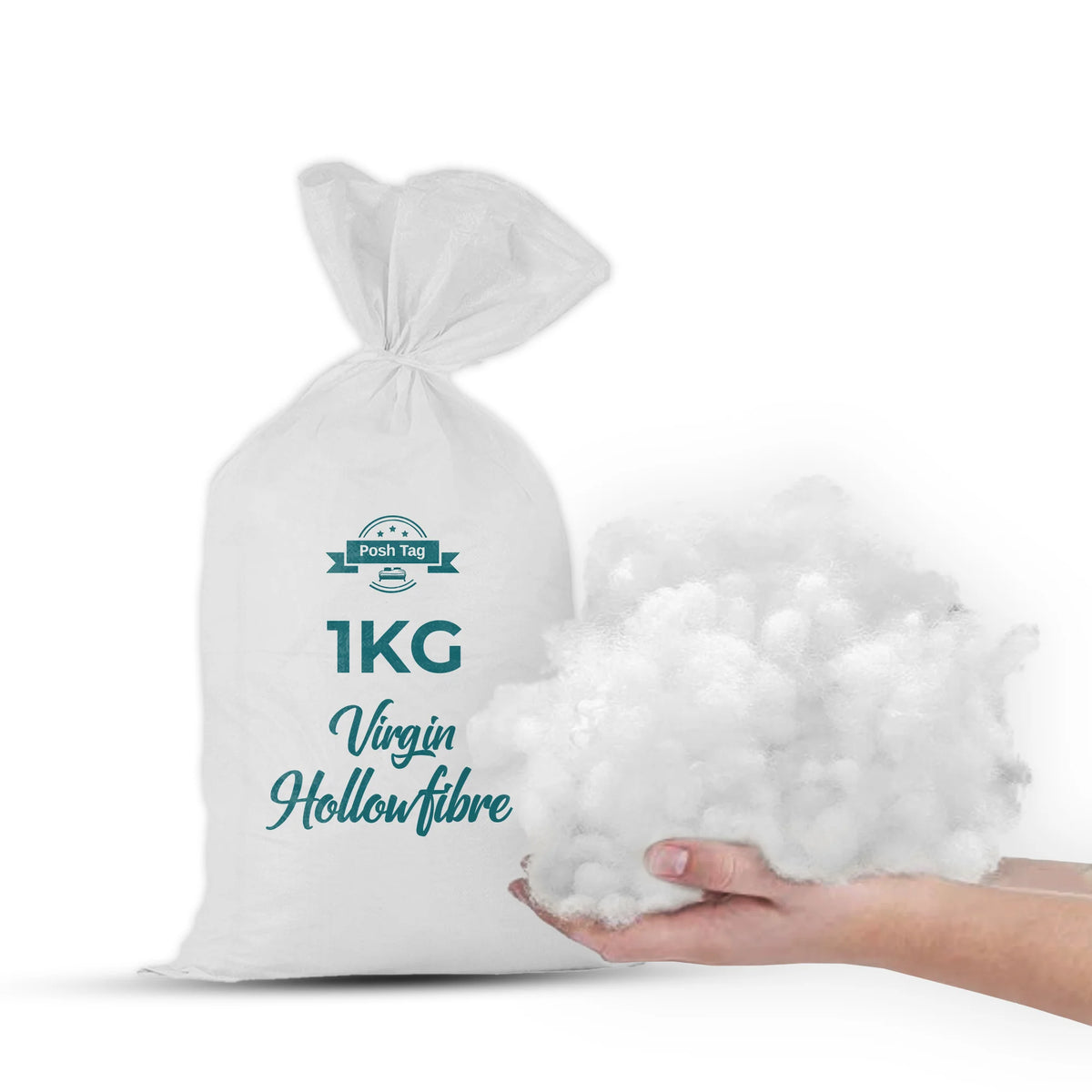
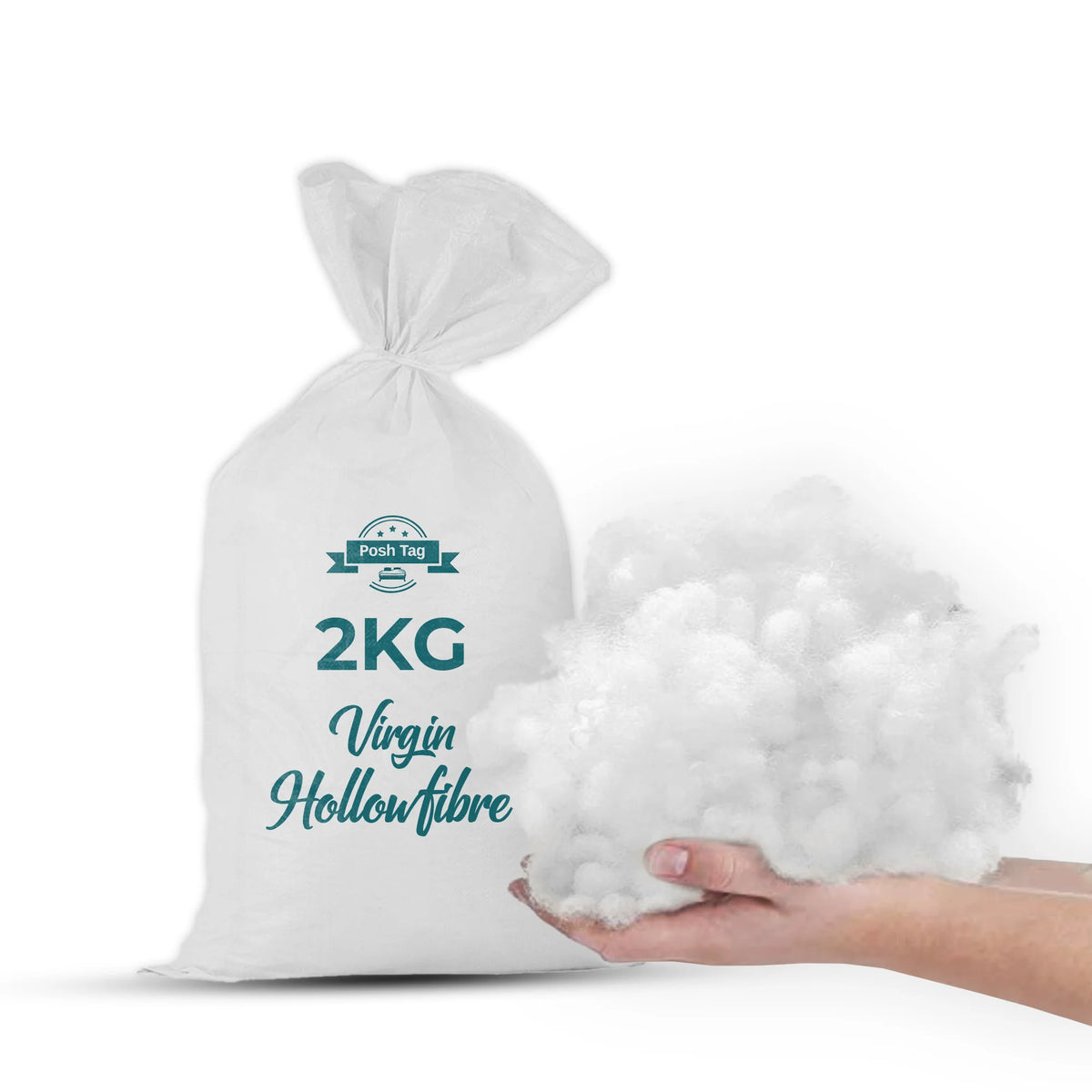
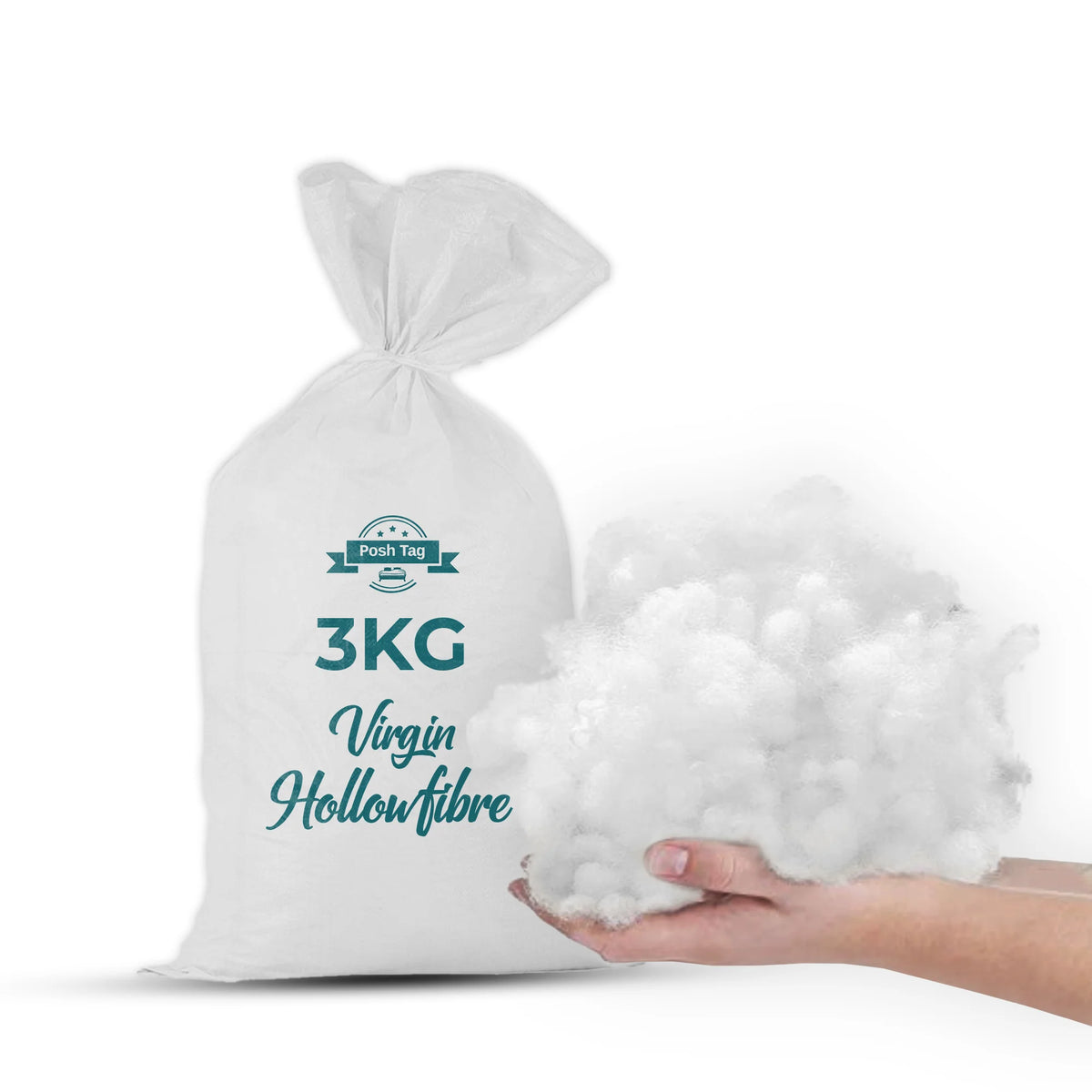
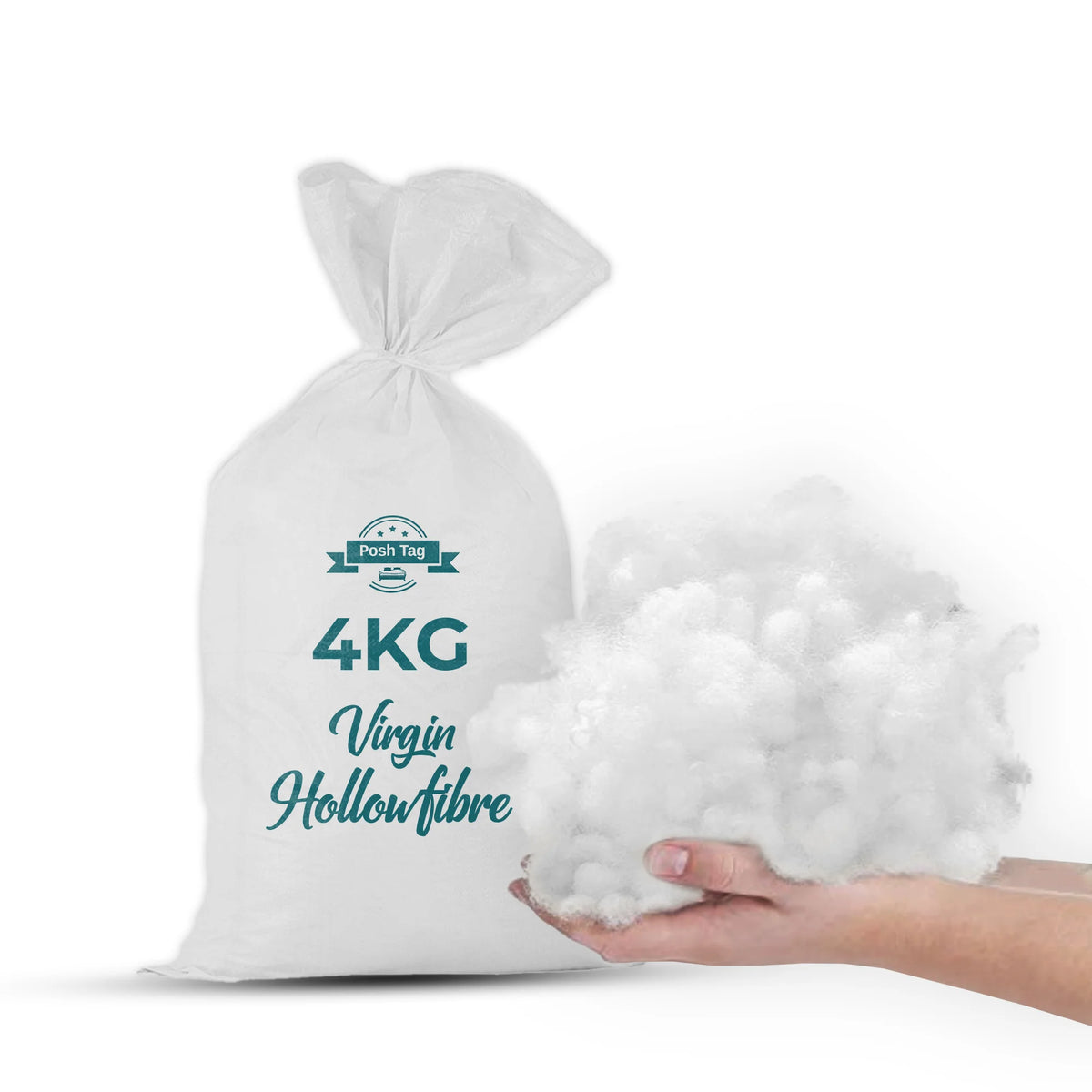
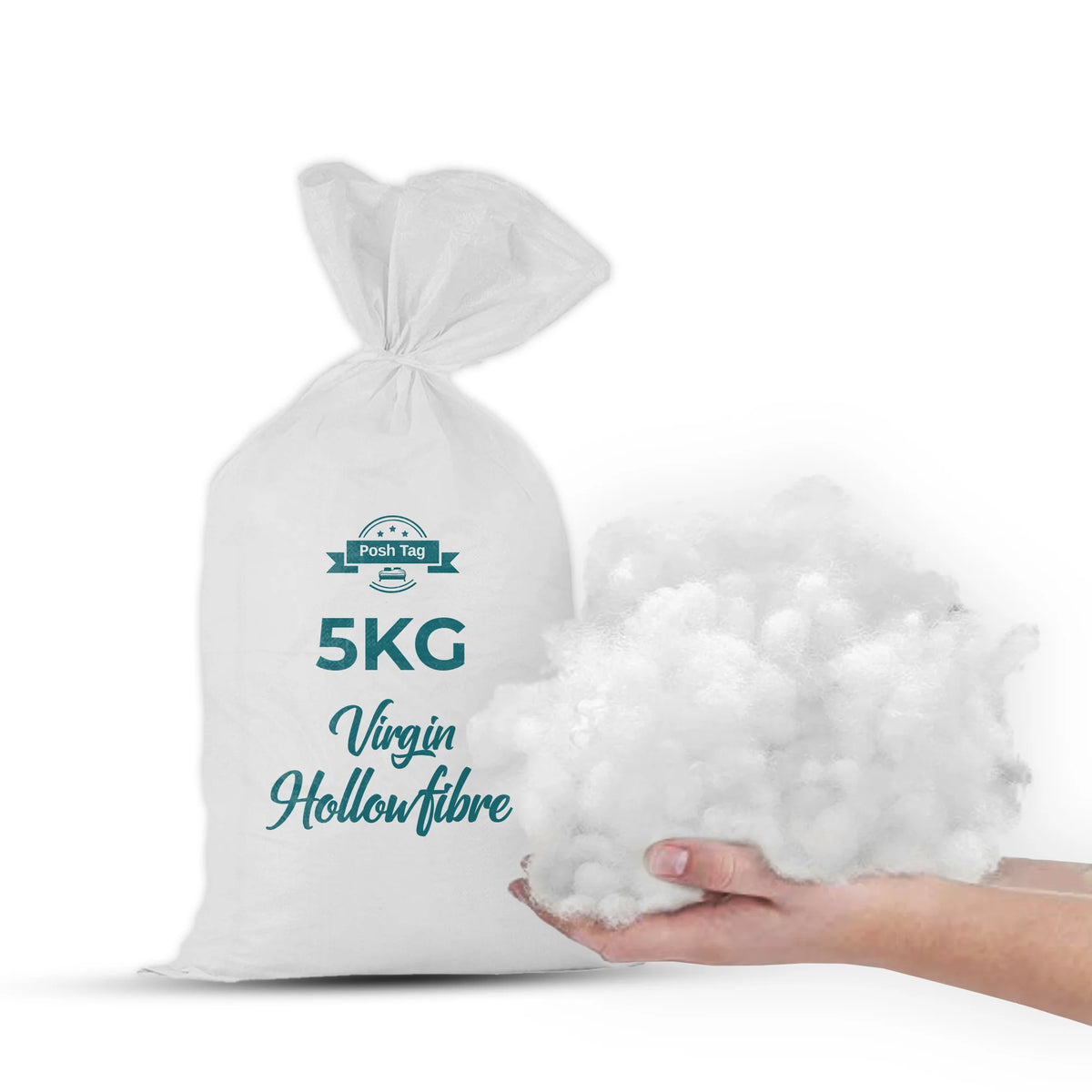
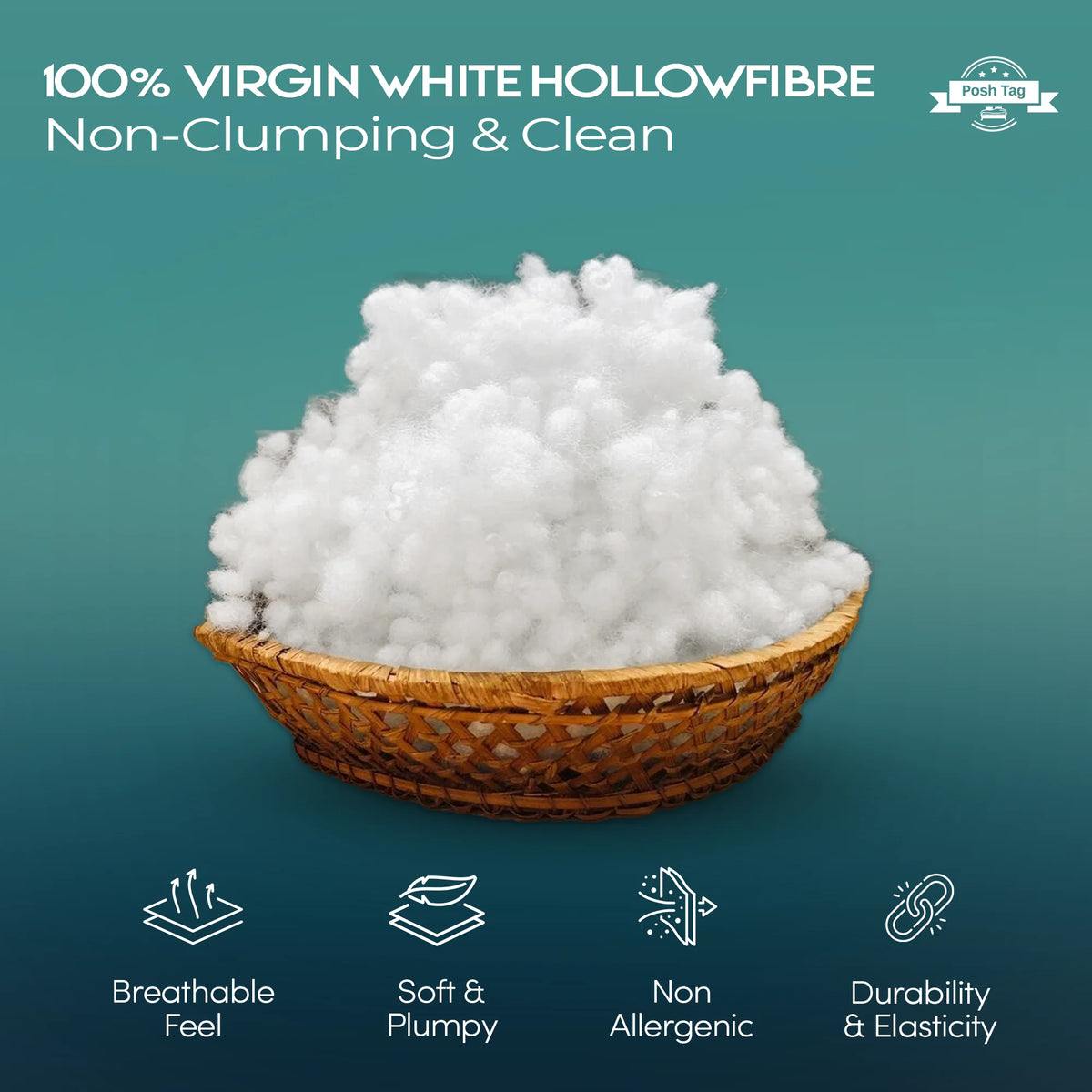
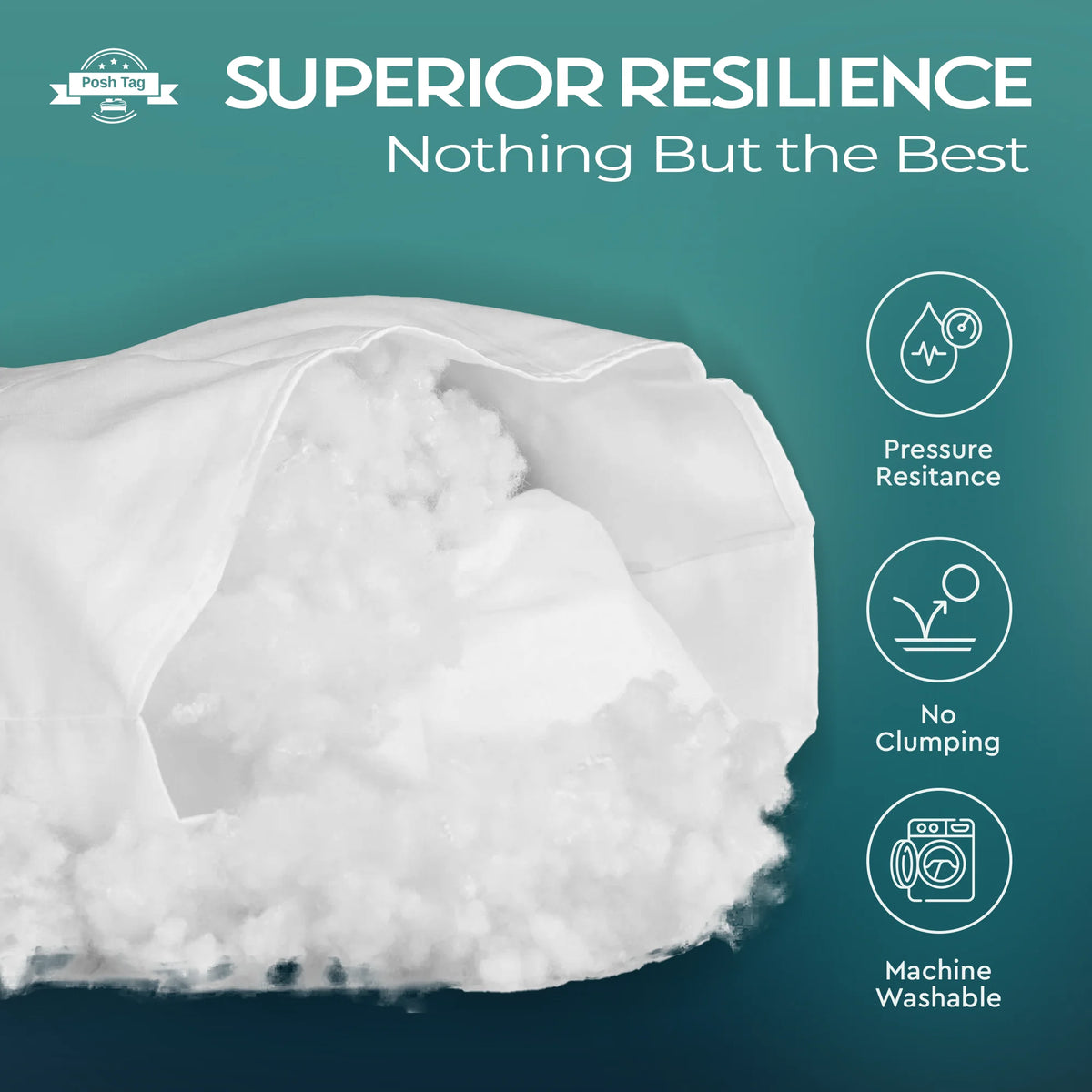
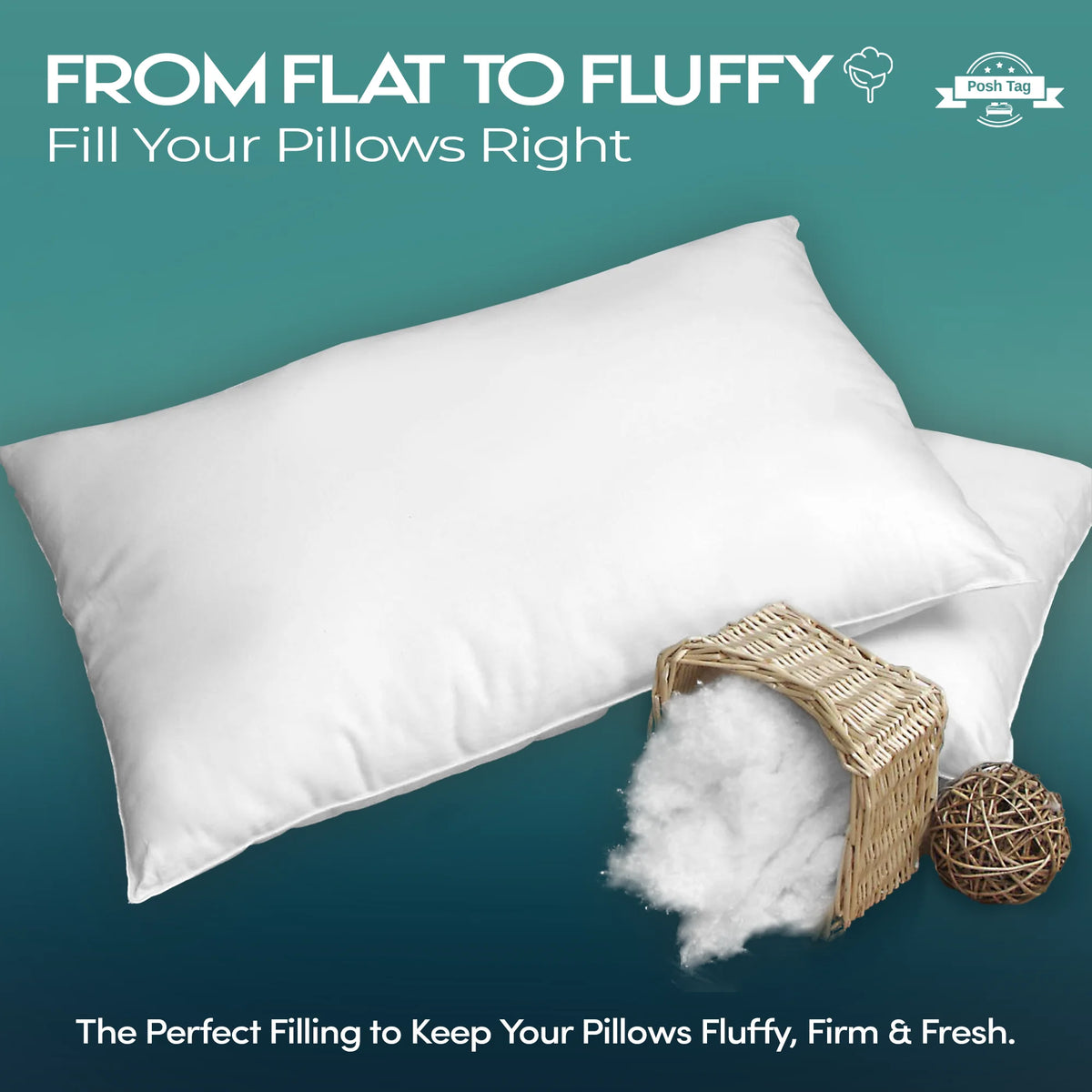

This is 100% pure virgin hollow fibre filling — the identical polyester stuffing we use in every pillow, duvet and cushion insert we manufacture at our own base in Rochdale, Greater Manchester. We are not repacking someone else's fibre. We buy it by the tonne for our own production lines, and these bags come off the same stock.
That is the whole reason it costs £4.38 a kilo rather than the £9 to £15 a kilo most UK sellers charge for virgin grade. You are buying at close to manufacturer's cost because we are the manufacturer.
Available in 1kg, 2kg, 3kg, 4kg and 5kg bags, with the price per kilo dropping as the bag gets bigger.
Most cheap polyester stuffing on the market is recycled — fibre that has already been through a heat process at least once, often reclaimed from bottles or textile waste. It looks similar in the bag. It does not behave the same.
Virgin hollow fibre has never been used before. Each strand is extruded with a hollow channel running through it, and that channel is what gives the fibre its spring: it compresses under weight and pushes back out again. Recycled fibre arrives with many of those channels already crushed flat, so it has less loft to begin with and loses what it has faster. In a toy or a scatter cushion you may not notice for a season. In a pillow you will notice by spring.
Virgin fibre is also consistently white and consistently clean. Recycled stock varies batch to batch and can carry a grey cast or a faint smell.
Our fibre is run through a carding machine before bagging. Carding combs the strands apart and aligns them, which breaks up the dense compressed mass fibre naturally forms and leaves it soft, open and lofty. It is the difference between opening a bag of light, airy fill and opening a bag of matted lumps you have to pull apart by hand before you can use any of it.
It also matters for the finished article: carded fibre distributes evenly as you pack it, so you get a smooth cushion rather than a lumpy one, and it springs back into shape time after time.
The fibre complies with British fire safety regulations and meets BS 5852, the UK standard for the ignition resistance of upholstered furniture fillings. If you are making cushions, sofa pads or anything upholstered — particularly anything you intend to sell — this is the standard your filling needs to meet. Plenty of imported stuffing sold online does not.
Because it is carded, it pulls apart into fine wisps for small crocheted pieces and packs firm for limbs and heads without going lumpy — the two things that matter most in amigurumi stuffing, where a lumpy arm shows through the stitches. It is the same grade used in commercially made soft toys, it is washable, and it meets BS 5852. A medium teddy bear takes 100–150g; a small amigurumi figure 20–50g, so a single 1kg bag goes a very long way.
For filling new covers, making your own inserts, or plumping tired ones that have gone thin in the middle. Also scatter cushions, floor cushions, pouffes, draught excluders, and re-stuffing sofa seats, backs and arm pads that have collapsed.
Refill a flat pillow rather than replacing it: open the seam, add fibre until it holds your head level, restitch. Or fill your own from scratch — 700g gives a standard UK pillow a medium feel.
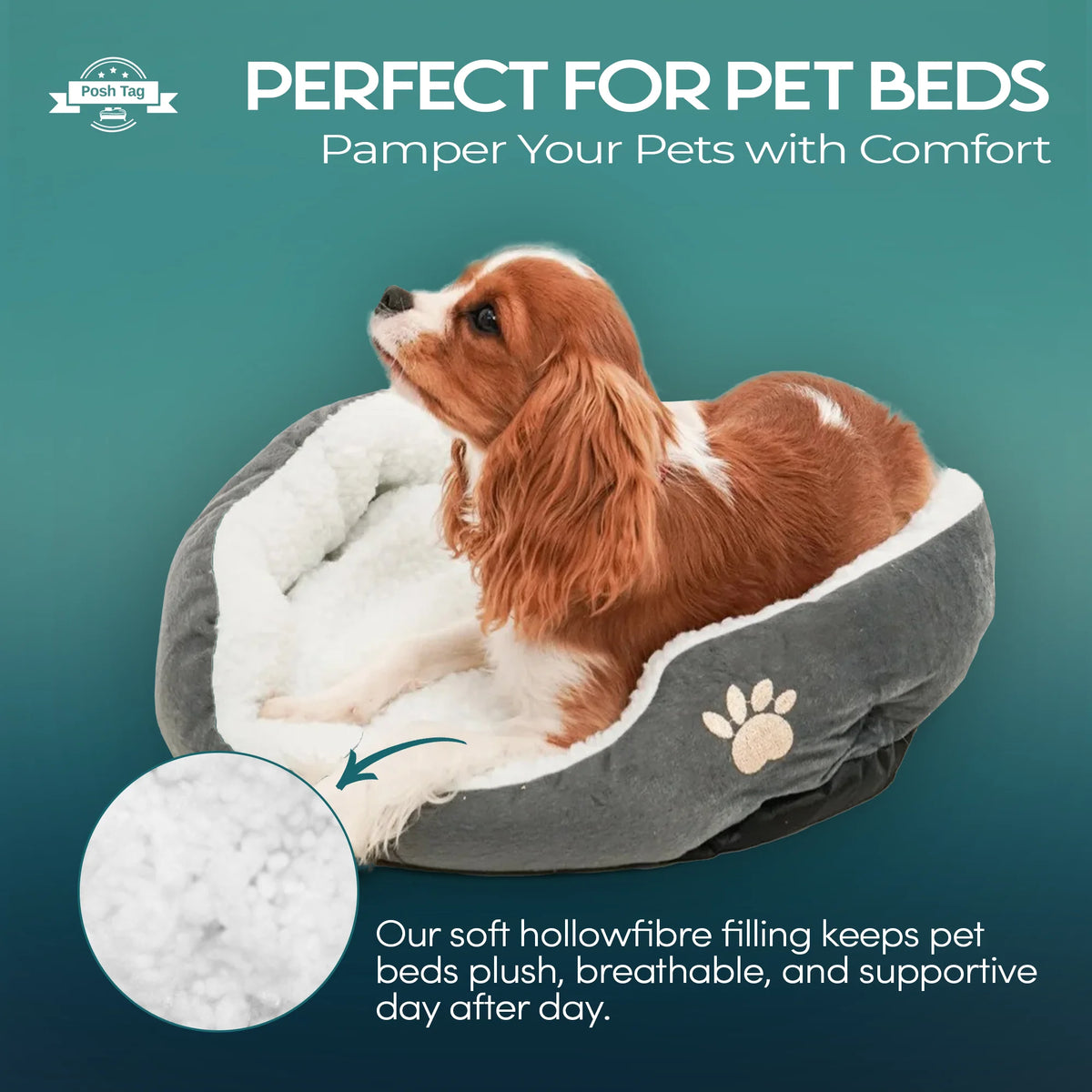
Washable, and cheap enough to replace the filling rather than the whole bed when it flattens. Dog beds, cat beds and crate pads.
The most common question we get, and the one most sellers leave you to guess at. These are the weights we actually use in production, so they are a reliable starting point rather than an estimate.
| What you are filling | Approximate fibre needed |
|---|---|
| Standard UK pillow, 74 x 48cm — medium feel | 700g |
| Standard UK pillow — firm, or box edge | 800–900g |
| 16 x 16in cushion (40 x 40cm) | 250–350g |
| 18 x 18in cushion (45 x 45cm) | 350–450g |
| 20 x 20in cushion (50 x 50cm) | 450–550g |
| Medium teddy bear or knitted toy, around 30cm | 100–150g |
| Small amigurumi figure | 20–50g |
| Small to medium pet bed | 1–2kg |
As a rule, buy more than the table says. Fibre compresses over the first few weeks, and a cushion stuffed to "just right" on day one reads as under-filled by the end of the month. Overfill slightly and let it settle.
| Material | 100% virgin polyester hollow fibre |
| Recycled content | None |
| Processing | Carded — lofted and ready to use |
| Fire safety | BS 5852 compliant |
| Colour | Pure white |
| Bag sizes | 1kg, 2kg, 3kg, 4kg, 5kg |
| Price per kilo | From £4.00 at 5kg |
| Washing | Machine washable at 40°C once enclosed, tumble dry low |
| Allergies | Hypoallergenic — synthetic, so dust mites cannot feed on it |
| Made in | Rochdale, Greater Manchester |
Hollow fibre is a polyester strand extruded with a hollow channel running down its centre, rather than being solid all the way through. That channel traps air, which makes the fibre lighter for the same bulk, warmer for the same weight, and springy — it compresses under pressure and pushes back out. It is the standard filling for UK pillows, duvets, cushions and soft toys because it is washable, non-allergenic and holds its shape far better than solid-fibre polyester.
Virgin fibre has never been used or heat-processed before, so every hollow channel is intact and the fibre has its full loft and springback. Recycled fibre is reclaimed from bottles or textile waste and re-extruded; the process crushes a proportion of those channels flat, so it starts with less loft and loses it faster. Recycled is cheaper and fine for things that do not bear weight — a decorative cushion, a wall hanging. For anything that gets sat on, slept on or hugged nightly, virgin lasts several times longer. Ours is 100% virgin with no recycled content.
Carded virgin polyester fibrefill. Two things matter in amigurumi: the stuffing must pull apart into small, fine wisps so you can fill a 3cm arm without a visible lump, and it must not migrate or clump after handling, because crochet stitches are open and every lump shows through. Uncarded or recycled fibre fails on both counts. Add it in small pieces with the blunt end of a hook rather than pushing in big handfuls, and stuff firmer than feels right — the fabric relaxes.
Around 100–150g for a medium bear of roughly 30cm, and 20–50g for a small amigurumi figure. A large bear of 60cm or more can take 400–500g. Soft toys are usually stuffed firmer than cushions, so weigh out a little more than you think and work it in gradually — you can always take some out, but adding after the seam is closed means unpicking.
Carding is a mechanical process that combs the fibre strands apart and aligns them before bagging. Uncarded fibre comes compressed and matted, and you have to tease every handful open before you can use it. Carded fibre arrives already lofted — light, open and airy — so it goes straight into your project and distributes evenly instead of forming lumps. Ours is carded. Cheap imported stuffing frequently is not, which is the real reason some bags feel like half the volume for the same weight.
Yes. It complies with British fire safety regulations and meets BS 5852, the UK standard covering ignition resistance of fillings used in upholstered furniture. That matters if you are filling cushions, sofa pads or seating — and it matters a great deal if you are making items to sell, because compliance is a legal requirement for upholstered goods placed on the UK market. Much of the cheap filling sold through marketplaces carries no such certification.
About 700g for a standard UK pillow, 74 x 48cm, at a medium feel — that is exactly what we put in our own hotel pillows. Go to 800–900g if you want firm support or you are filling a box-edge pillow, because the gusset creates extra volume. Under about 500g a standard pillow feels thin within months. So a 1kg bag fills one pillow generously, and 5kg does six to seven.
Roughly 250–350g for a 16 x 16in cushion, 350–450g for an 18 x 18in, and 450–550g for a 20 x 20in. Always err high. Fibre settles over the first few weeks, so a cushion that feels perfectly filled on the day you finish it will feel soft a month later.
Yes, once it is enclosed in a cover — machine wash at 40°C and tumble dry on a low heat. Loose fibre should not go in a washing machine on its own; it will escape the drum and block the filter. Drying matters more than washing: get it completely dry through the middle, because fibre put away damp clumps and smells.
Polyester hollow fibre is inert and non-toxic. It does not off-gas in normal use and it is not a food source for dust mites, which is why it is recommended for allergy sufferers over feather and down. For toys, this is the standard fill used in commercially made soft toys — the safety questions that matter in a handmade toy are usually the small parts, eyes and seams rather than the stuffing.
Yes, and it is the cheapest fix there is if the cover and stitching are still sound. Unpick a short section of seam, pull out the old compressed fibre, tease in new fibre a handful at a time until the pillow holds your head level with your spine, then restitch. Do not simply add to the old fill — the flattened fibre underneath is the reason it went flat, and it will not recover.
Good carded virgin fibre resists it; uncarded or recycled fibre clumps quickly. The clumping people complain about usually comes from one of two things: fibre that was packed in without being teased apart first, or fibre that was washed and not dried thoroughly. Pull it into loose wisps as you fill rather than pushing in compressed handfuls, and it stays even.
Fibrefill (spelled fiberfill in American patterns), polyfill and poly stuffing are all generic names for loose polyester stuffing, and hollow fibre is a grade of it — the strands are hollow rather than solid, which is what gives the loft and the bounce. Wadding is different again: polyester pressed into a flat sheet or batting for quilting and lining, not loose fill. If a pattern asks for toy stuffing, polyfill or fibrefill, loose hollow fibre is what you want.
For most people, virgin hollow fibre — it is washable, hypoallergenic, holds its height, and costs a fraction of down. Feather and down moulds more softly and breathes better but cannot be washed as easily and is unsuitable for allergy sufferers. Memory foam holds a shape but cannot be machine washed at all. Our pillow filling guide compares all four properly.
It is polyester, so it is recyclable in principle, though few UK kerbside schemes accept loose textile fill — a textile recycling bank is the realistic route. The honest environmental argument for virgin fibre is longevity rather than feedstock: a pillow that lasts two years instead of eight months is two pillows that never got made. Reusing fibre from an old cushion into a new cover is better still, and it is worth teasing old fill apart and mixing it with new rather than throwing it out.
Here, in 1kg to 5kg bags, with the per-kilo price dropping at every step. If you need more than 5kg — for upholstery, a craft business or a hospitality refit — see our wholesale bedding supplier page, since we fill by the tonne and can quote accordingly.
If you would rather buy the finished article than fill it yourself, see our hollow fibre pillows, hotel quality pillows and cushion inserts, all filled with this same virgin fibre. For how the fills compare, read the pillow filling guide; for washing and drying, how to wash pillows.
Wishlist is empty.


