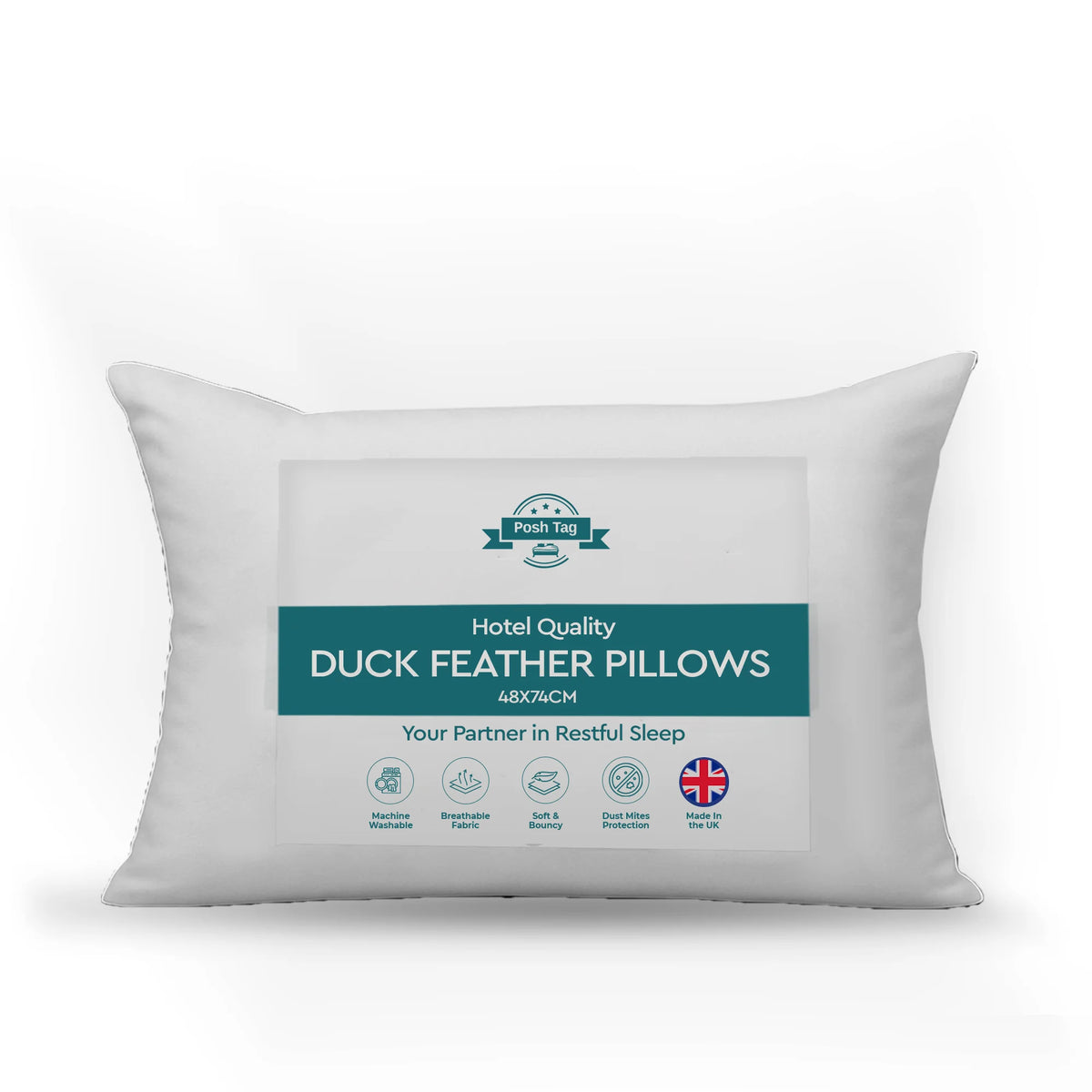
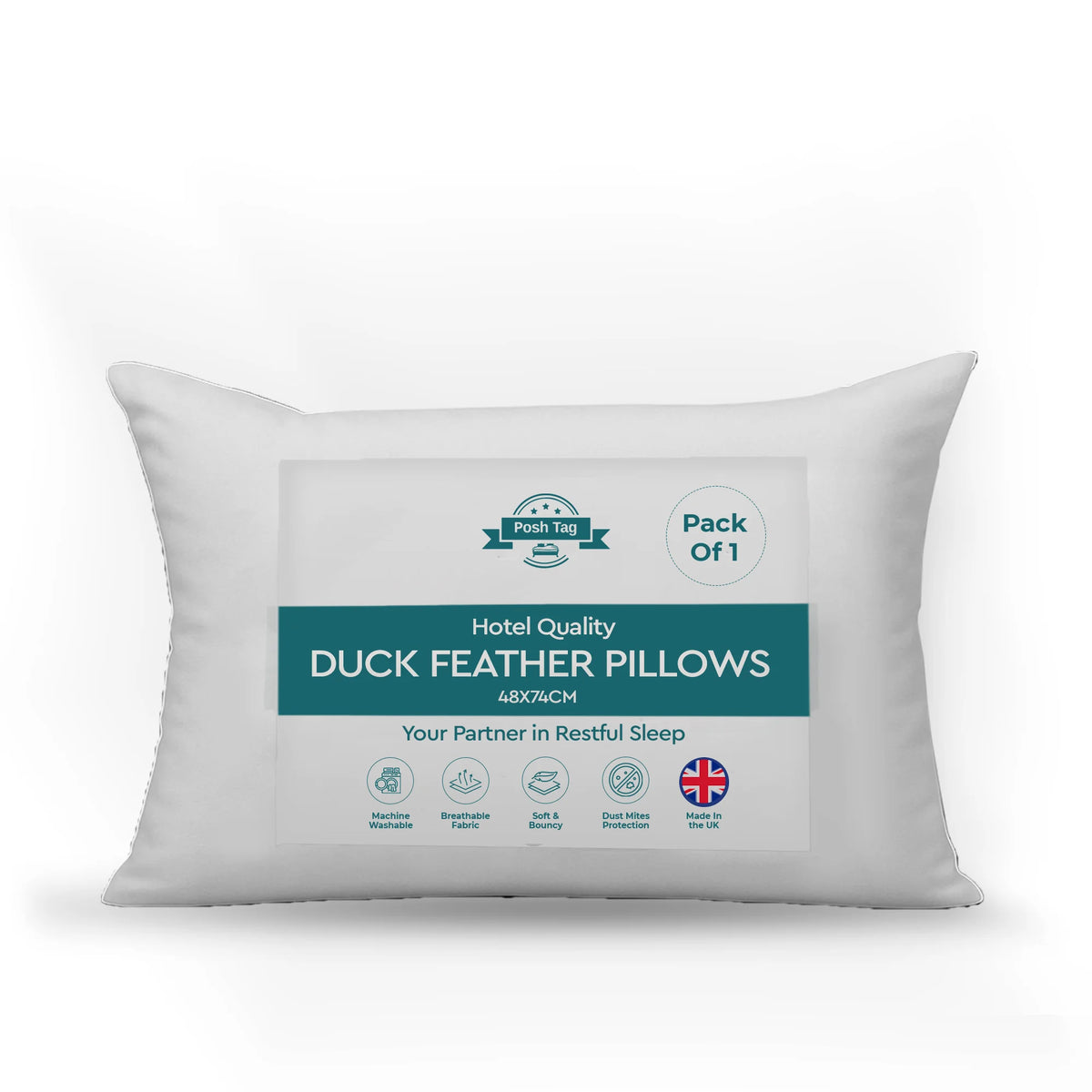
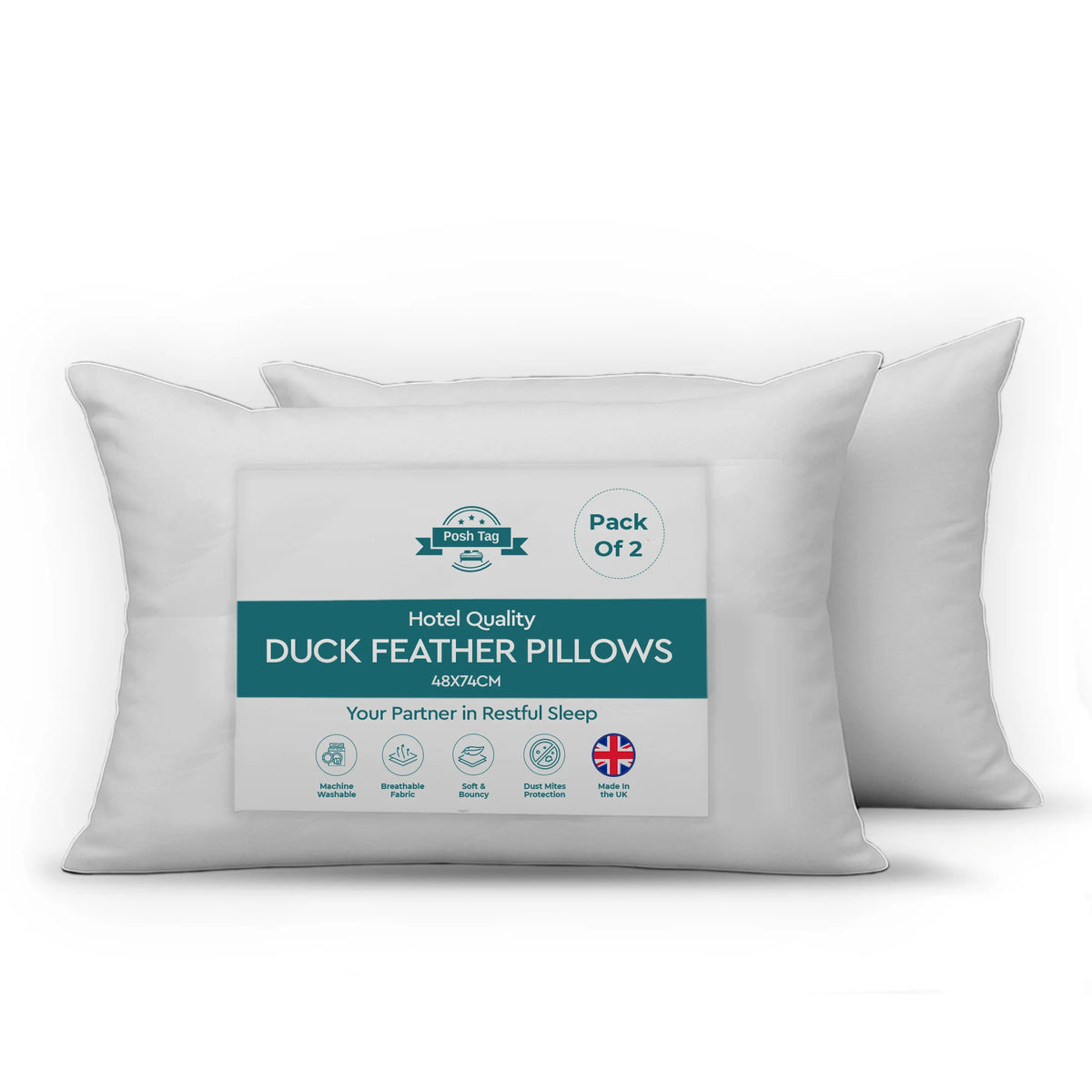
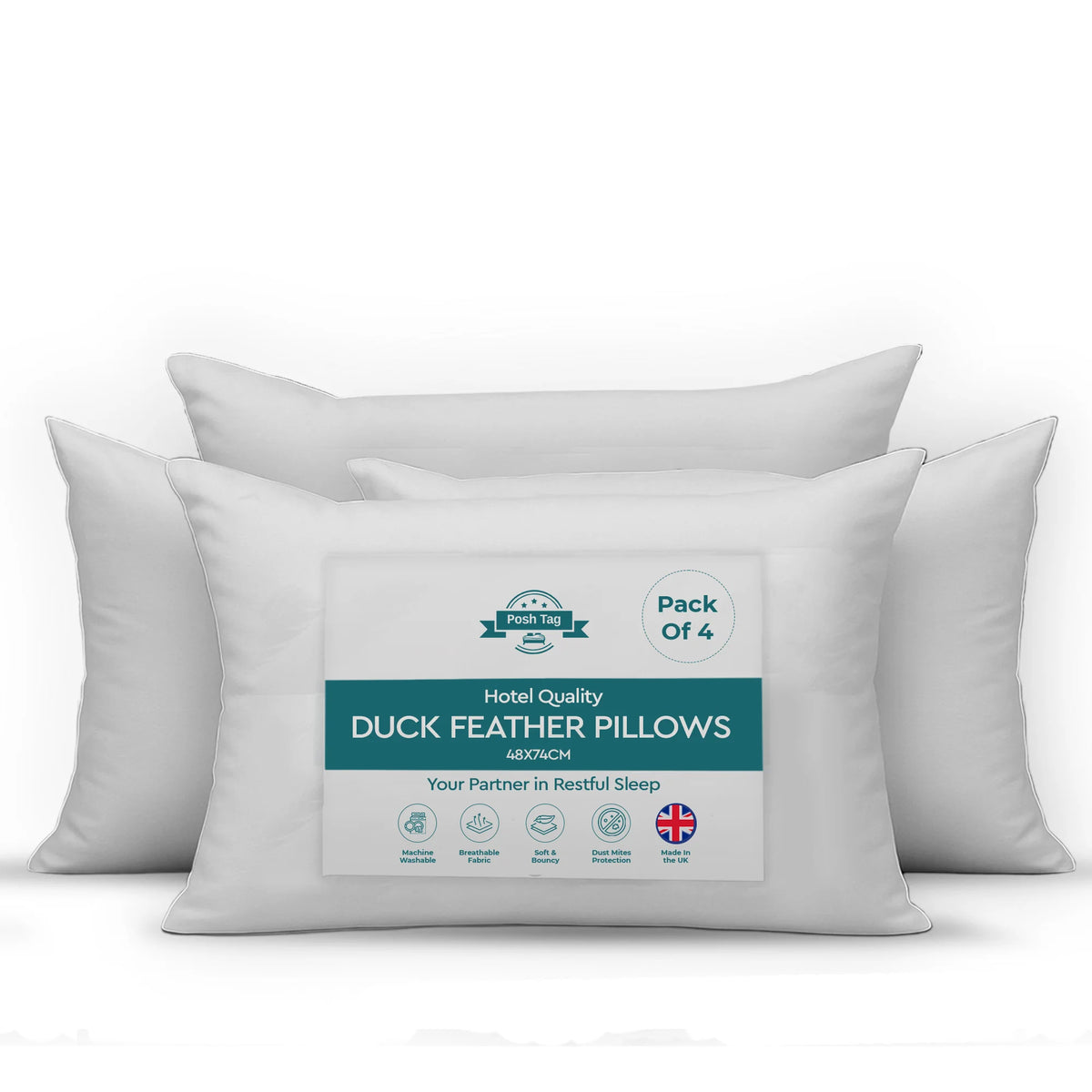
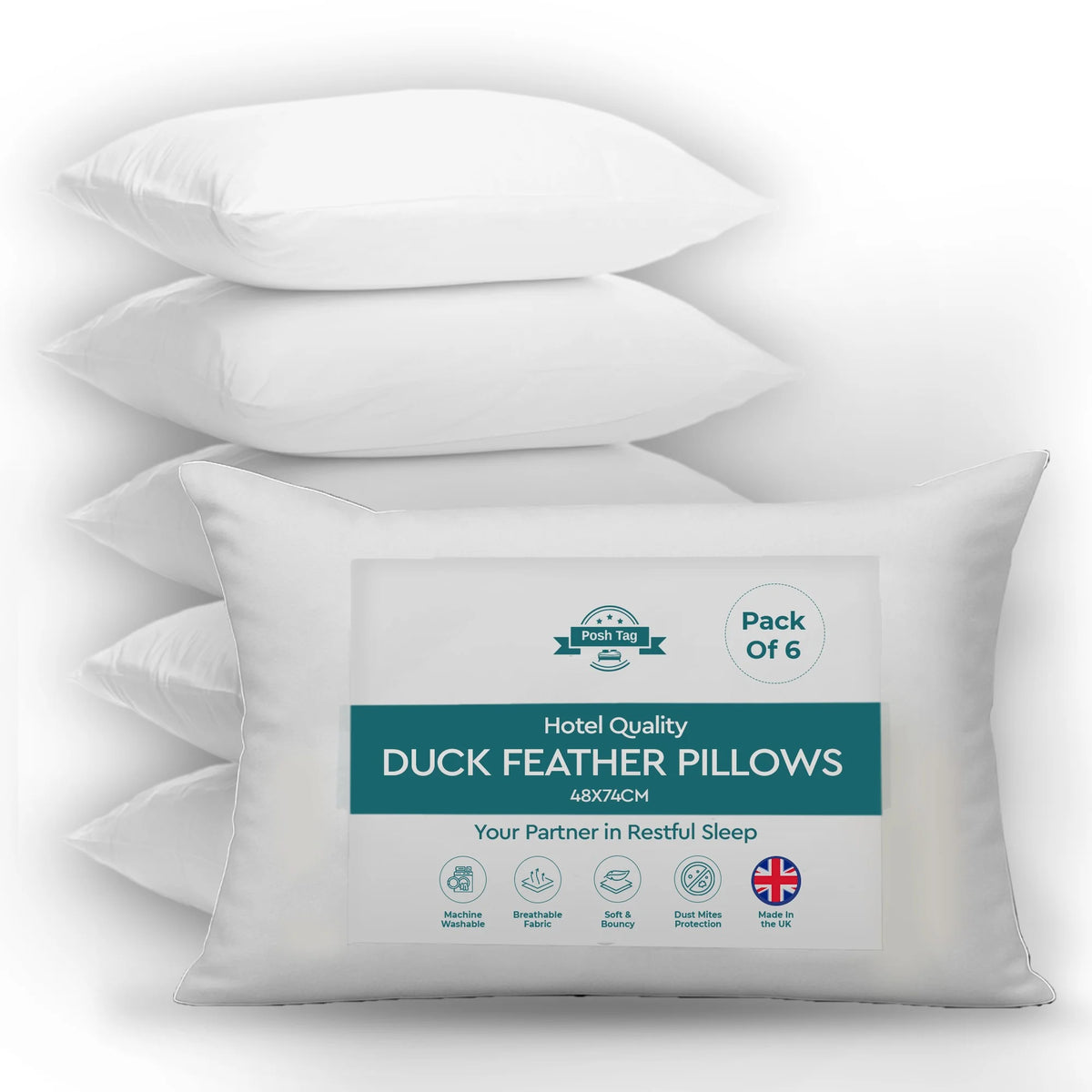
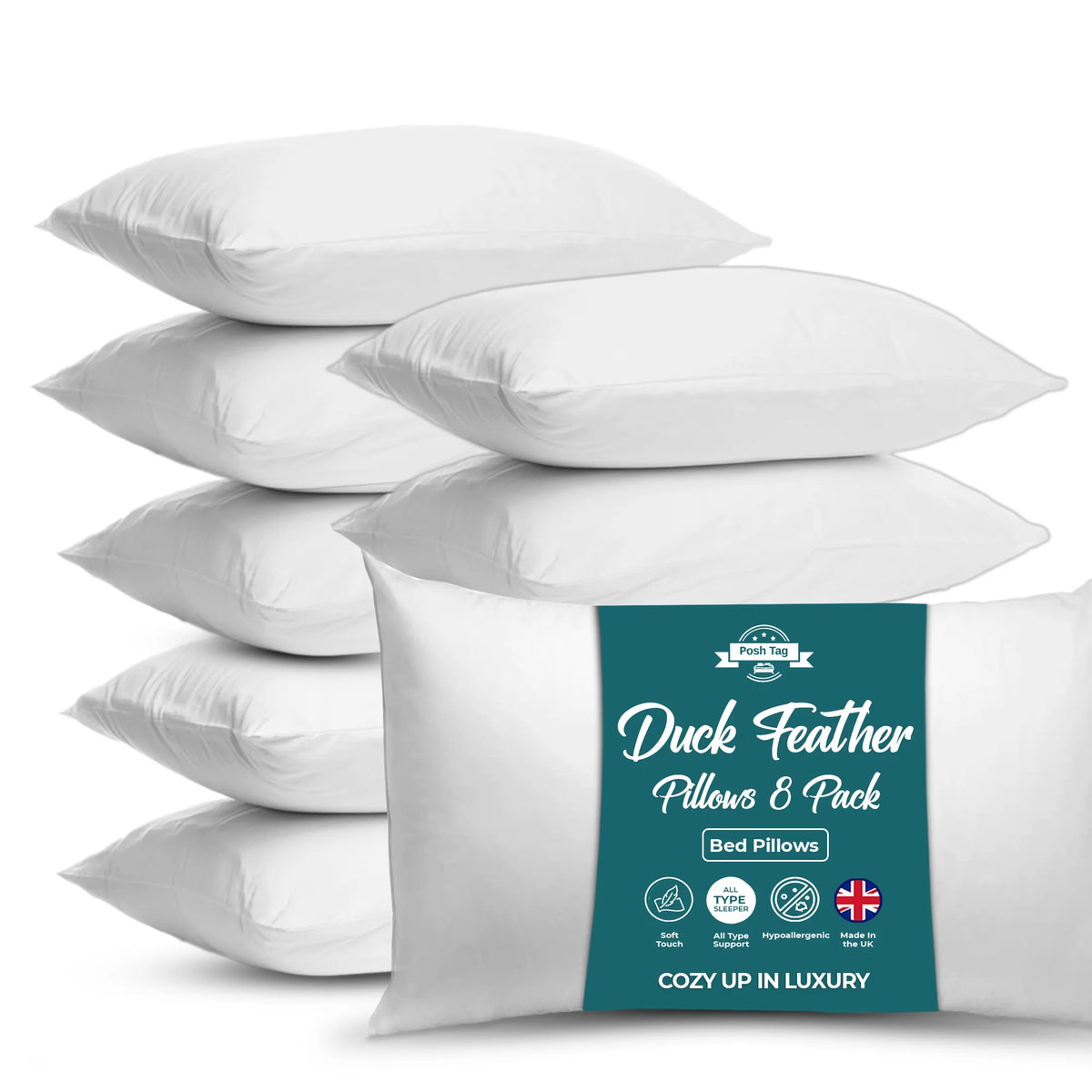
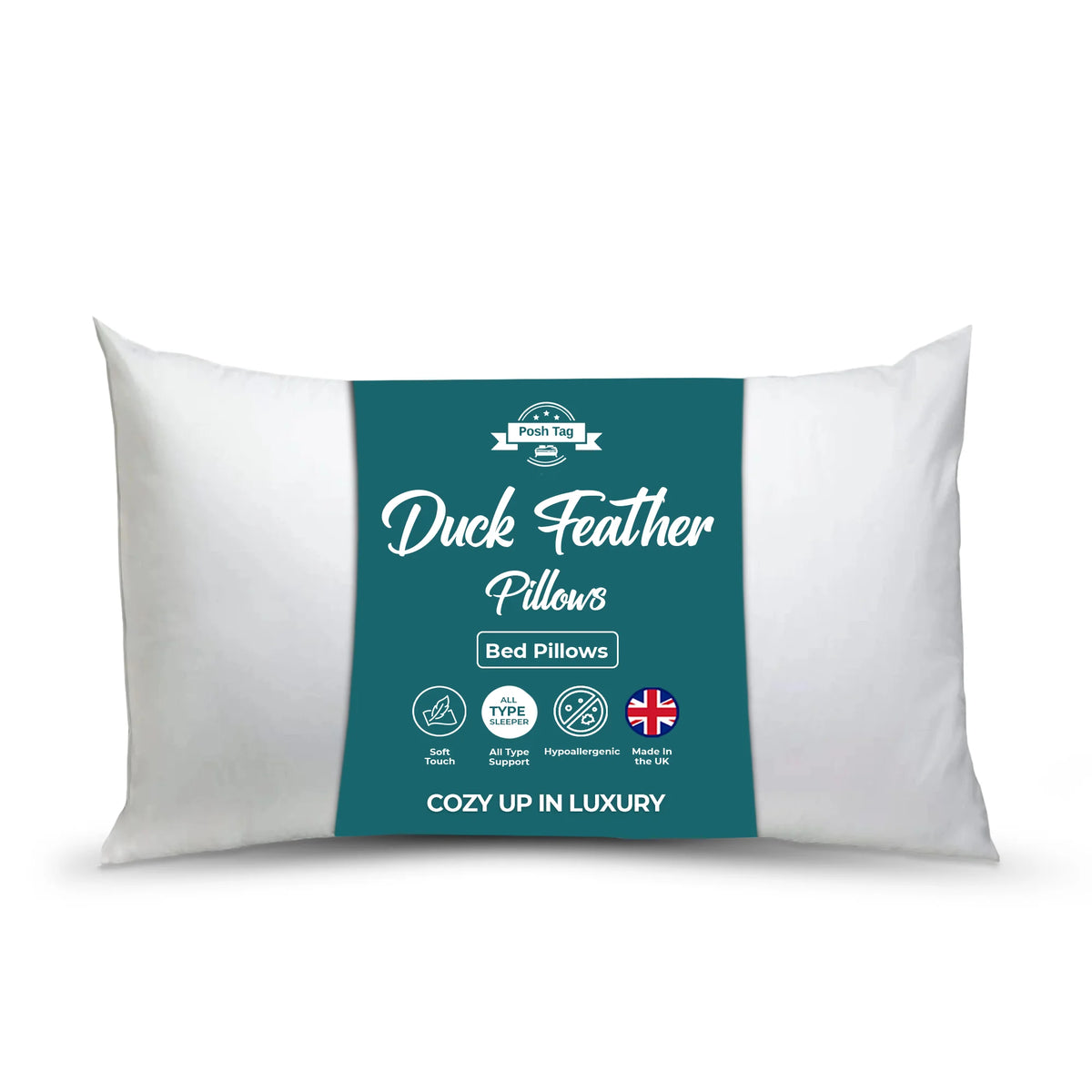
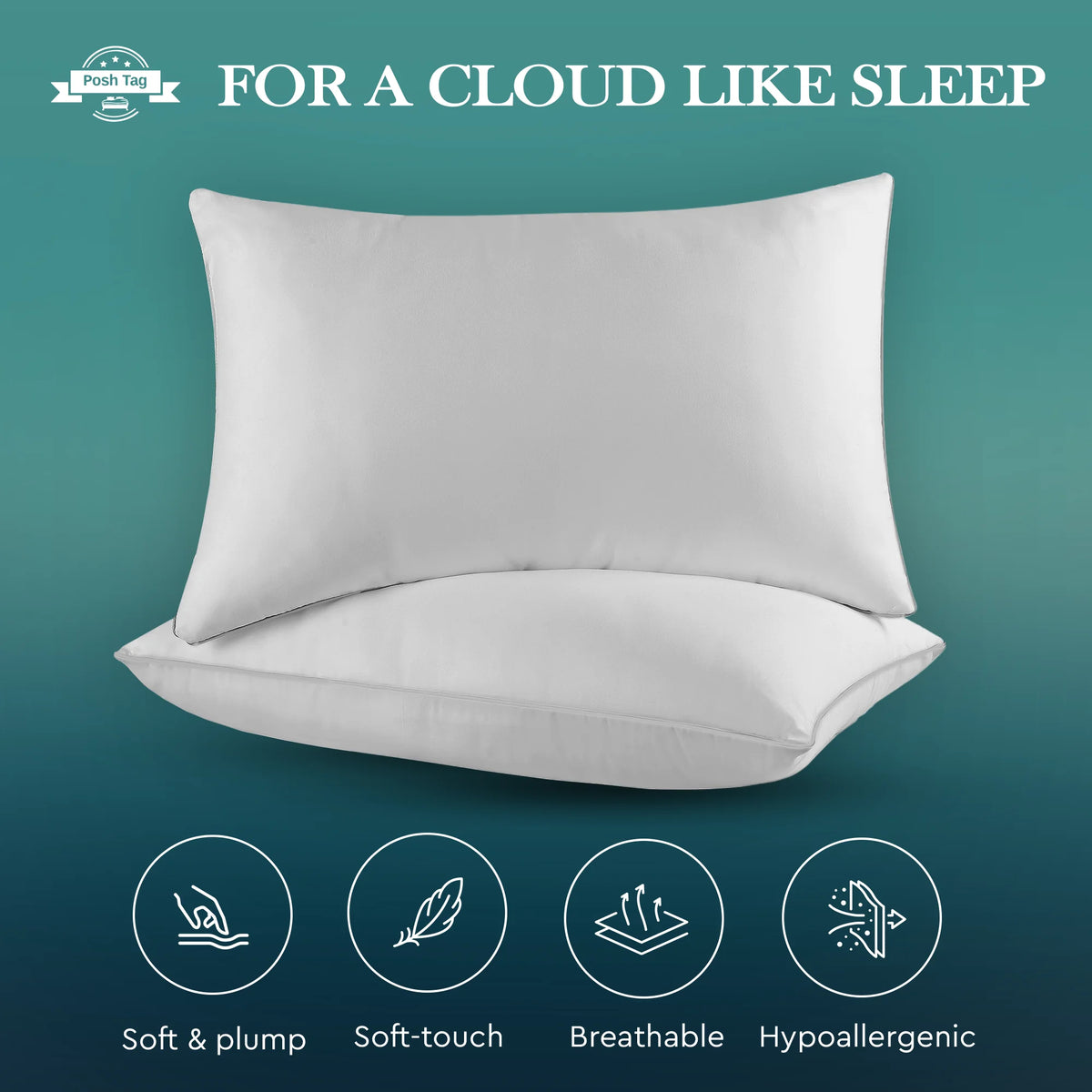
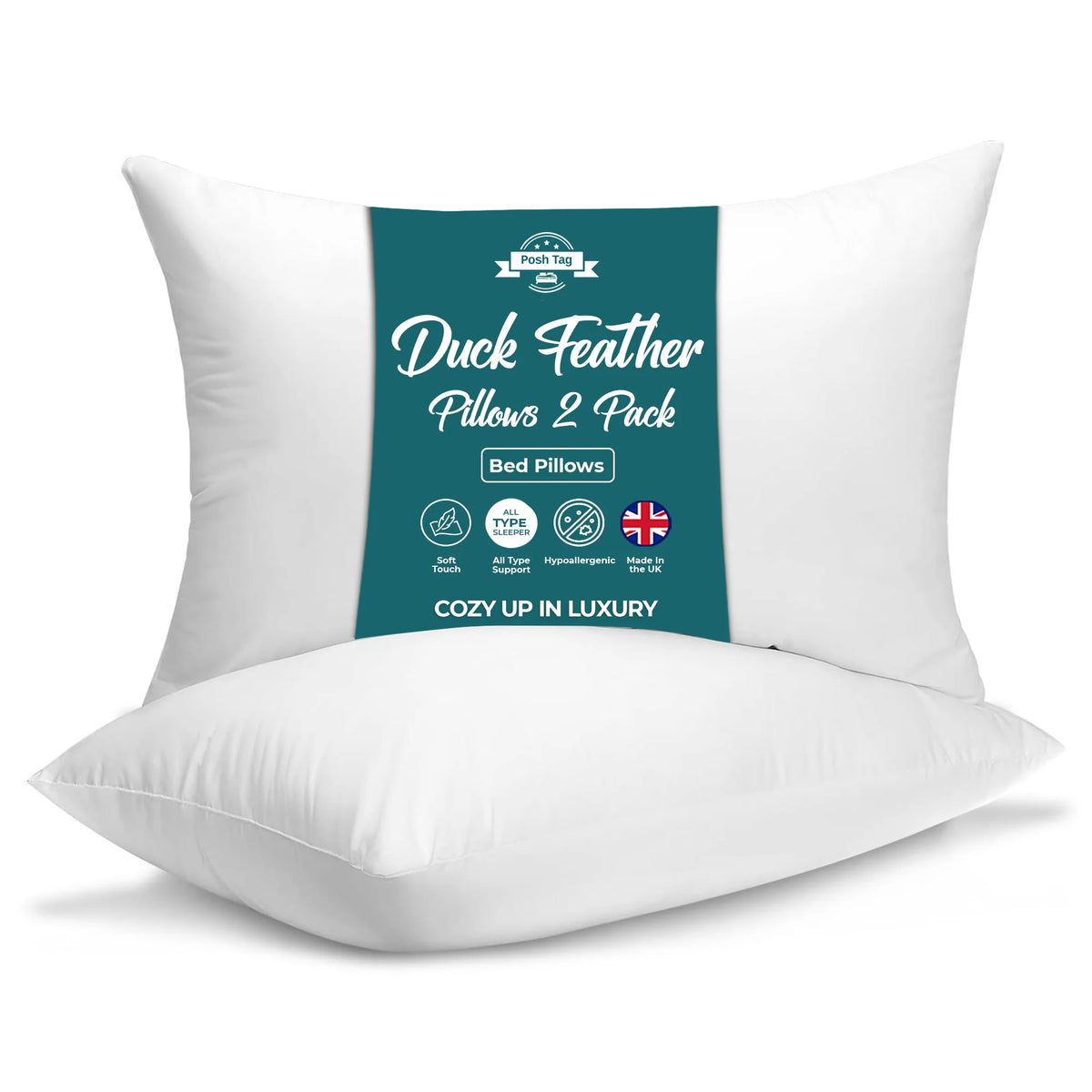
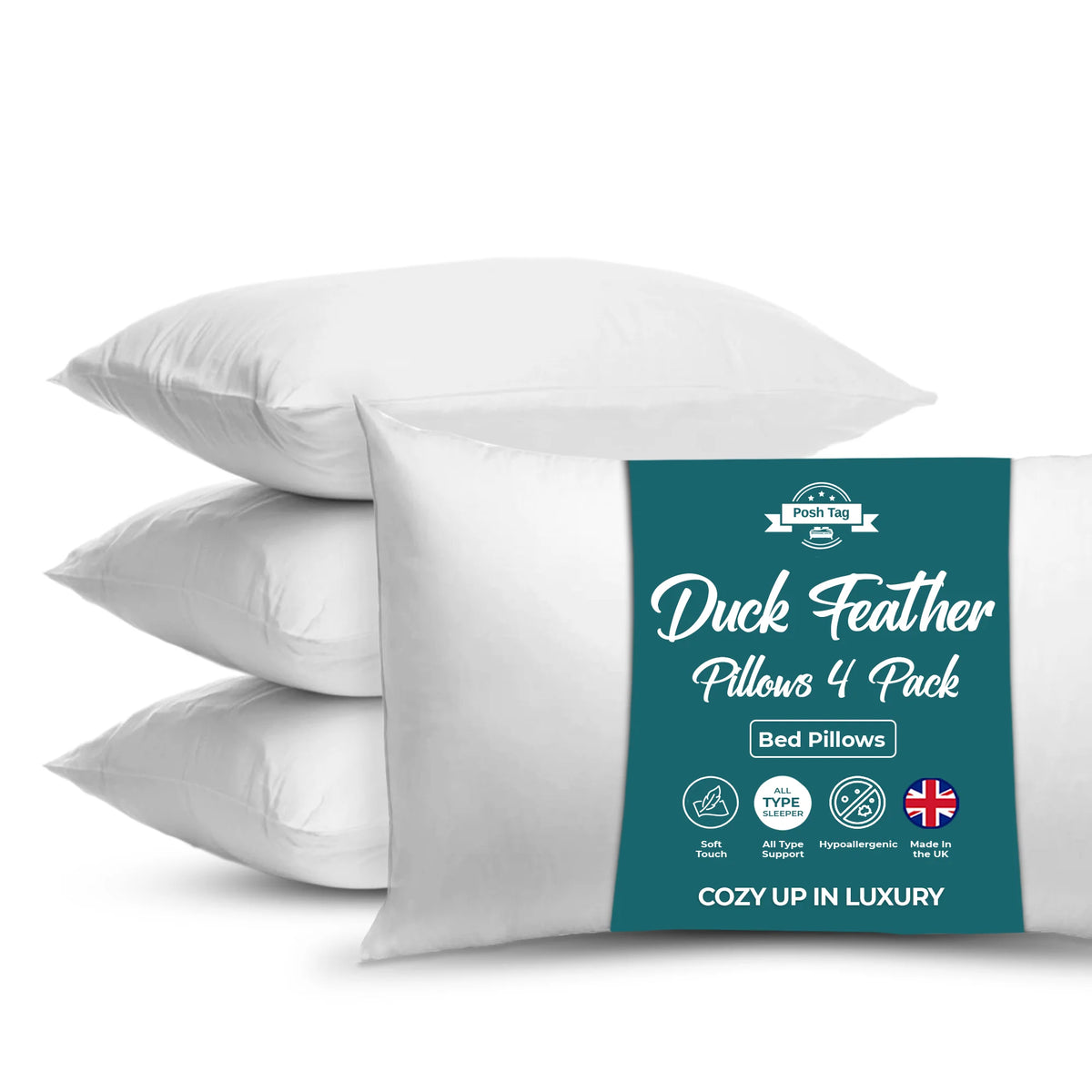
For those who prefer a natural fill, our Duck Feather Pillow offers a softer, more traditional feel — made to the same manufacturing standard as the rest of our range. Finished with a soft microfibre cover, manufactured at our own base in Rochdale, Greater Manchester. Available in packs of 1, 2, 4, 6 or 8.
Standard UK size, 74 x 48cm — see the pillow size guide for what fits a standard pillowcase. Soft to medium support, best suited to back and side sleepers; the pillow firmness guide explains why sleep position decides this more than preference does. Machine washable at 40°C — see how to wash pillows for drying feather fill properly, which is the step most people get wrong.
Why choose a feather pillow
A feather pillow moulds to the shape of your head instead of pushing back against it. Synthetic fill has a springiness to it — it holds a shape and returns to it. Feather collapses under weight and stays where you put it, which is why people who like feather pillows tend to dislike everything else. It is also the reason you can plump a feather pillow into a different shape each night and it will keep it.
Frequently asked questions
What is the difference between feather and down?
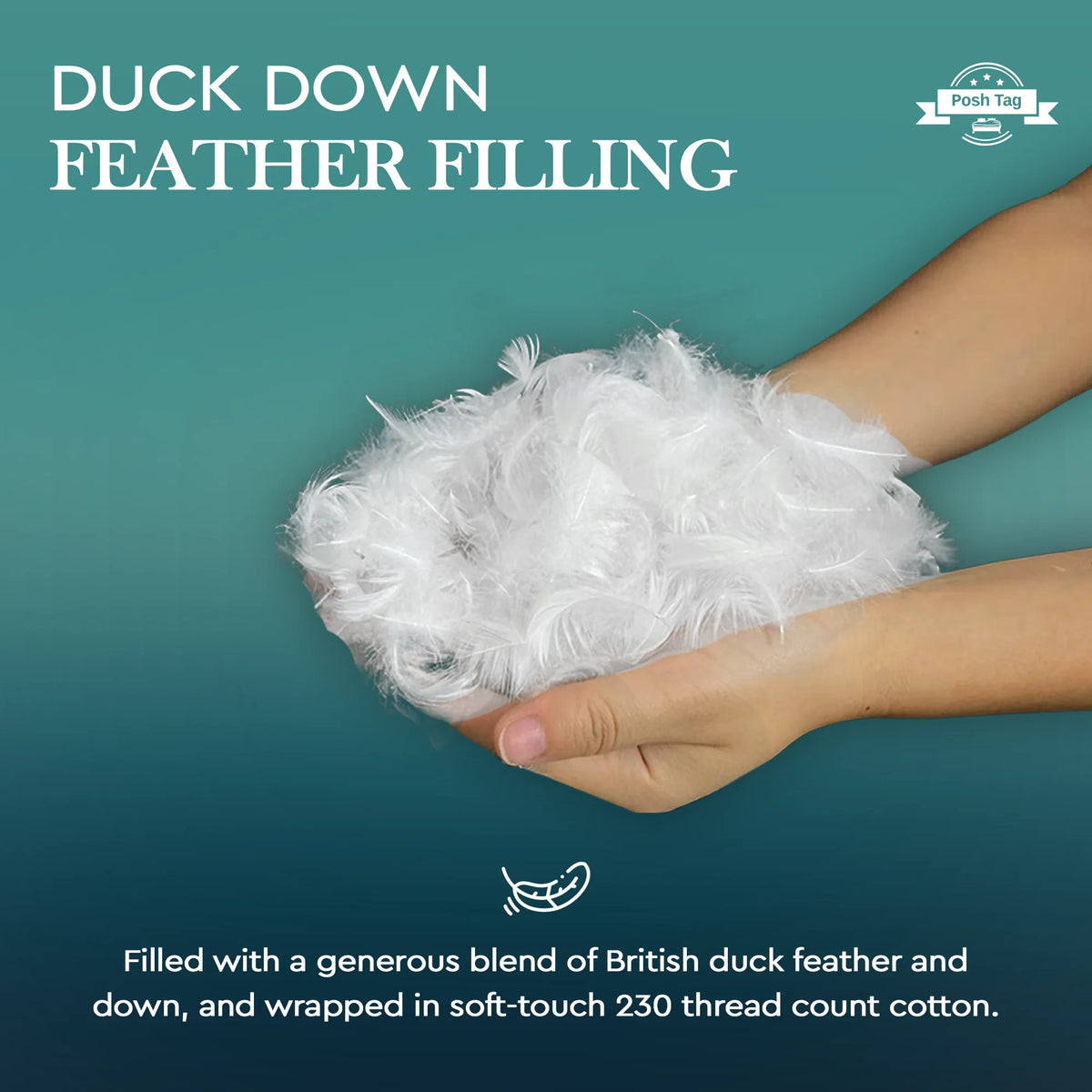
Feathers have a quill running through them and give a pillow structure and support. Down is the soft undercoating closest to the bird, with no quill, and gives softness and loft but very little support. Most feather pillows, including ours, use a blend: the feather provides the shape, the down takes the harshness off it. A pure down pillow is much softer, much more expensive, and too unsupportive for most sleepers.
Do feathers poke through the pillow?
Occasionally, and it is the quill tip rather than the whole feather. A densely woven casing is what prevents it, which is why the casing fabric matters more on a feather pillow than a synthetic one. If a quill does work its way through, pull it out from the side it is emerging rather than pushing it back in, or you will enlarge the hole.
Are duck feather pillows suitable for allergy sufferers?
Not usually the best choice. The common misconception is that people are allergic to the feathers themselves — most are actually reacting to dust mites, which live in any pillow but find natural fill easier to colonise than synthetic. If you have a known allergy, our hollow fibre pillows are the safer option; a zipped pillow protector helps considerably either way.
How do you wash a feather pillow?
Machine wash at 40°C on a gentle cycle with a small amount of detergent, then dry thoroughly on a low heat — and thoroughly is the operative word. Feather holds water far longer than synthetic fill, and a feather pillow put away damp will develop a smell that does not come out. Take it out, shake it, and put it back in for another cycle until there is no weight or coldness left in the middle.
Why does a new feather pillow have a smell?
A faint natural smell when a feather pillow is first unwrapped is normal — it is the natural fill, and it fades with airing over a few days. A strong or persistent smell usually means moisture, either from storage or from being dried insufficiently after washing.
Do feather pillows go flat?
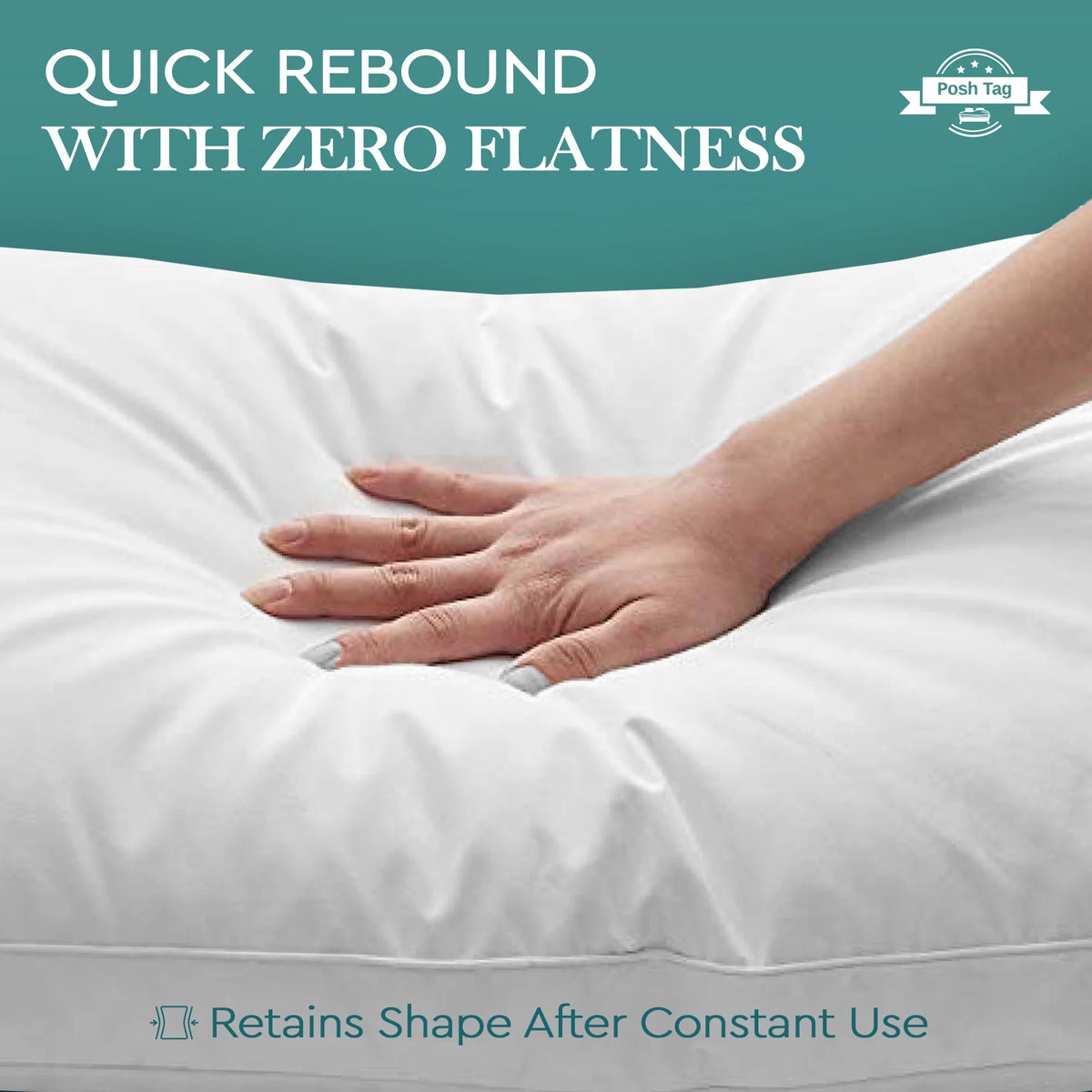
They flatten nightly and are meant to — that is the moulding feel people buy them for. What you do about it is plump them, which redistributes the fill and restores loft in seconds. Over years the feathers themselves break down and stop responding to plumping; that is when to replace.
Related
Browse the full range of duck feather pillows, compare it against synthetic fill in the pillow filling guide, or read how to choose a pillow if you are starting from scratch. Also see our hotel quality pillows, the full pillow range, and zipped pillow protectors — worth having over feather fill in particular.